
- English
- Français
- Deutsch
- Español
- Português
- Italiano
- Čeština
- Dansk
- Ελληνικά
- Svenska
- Eesti keel
- Suomen kieli
- Hrvatski
- Bahasa Indonesia
- Latviešu valoda
- Lietuvių
- Magyar
- Nederlands
- Norsk
- Polski
- Українську
- Русский
- Türkçe
- Română
- العربية
- Srpski
- 汉语
- 日本語
- 한국어
- हिंदी
- עברית
- български език
- বাংলা
- ภาษาไทย
- Kiswahili
- Bahasa Melayu
- Tagalog
- IsiZulu
- Tiếng Việt
- اردو
Learn Bulgarian
10%
?

- Hello
- + A more familiar expression
- Good evening
- Goodbye
- + A more familiar expression
- See you later
- + Another way to say
- Yes
- No
- Excuse me!
- Thanks
- + Synonymous expression
- Thanks a lot
- + Another way to say
- Thank you for your help
- + Another way to say
- You’re welcome
- + Another way to say
- Okay
- How much is it?
- + Another way to say
- Sorry!
- + Another way to say
- I don't understand
- I get it
- I don't know
- Forbidden
- Excuse me, where are the toilets?
- Happy New Year!
- + Expression used in common speech
- Happy Birthday!
- Happy Holidays!
- Congratulations!
- + Synonymous expression

| English | Bulgarian | |||
|---|---|---|---|---|
| Hello | Здравейте | |||
| Hi | Здравей | |||
| Good evening | Добър вечер | |||
| Goodbye | Довиждане | |||
| Goodbye | Чао - Дочуване | |||
| See you later | До скоро | |||
| See you later | До след малко | |||
| Yes | Да | |||
| No | Не | |||
| Excuse me! | Извинете | |||
| Thanks | Благодаря | |||
| Thanks | мерси | |||
| Thanks a lot | Благодаря много | |||
| Thanks a lot | мерси много | |||
| Thank you for your help | Благодаря за помощта | |||
| Thank you for your help | Благодаря за съдействието | |||
| You’re welcome | Моля | |||
| You’re welcome | Няма защо ; За нищо | |||
| Okay | Добре | |||
| How much is it? | Колко струва? | |||
| How much is it? | каква е цената? | |||
| Sorry! | Съжалявам | |||
| Sorry! | пардон, прощавайте | |||
| I don't understand | Не разбирам | |||
| I get it | Разбрах | |||
| I don't know | Не знам | |||
| Forbidden | Забранено | |||
| Excuse me, where are the toilets? | Къде е тоалетната? | |||
| Happy New Year! | Честита Нова Година! | |||
| Happy New Year! | за много години | |||
| Happy Birthday! | Честит рожден ден! | |||
| Happy Holidays! | Весели празници | |||
| Congratulations! | Честито! | |||
| Congratulations! | поздравления |
View the learning path
All courses
Objectives Would you like to learn Bulgarian to communicate simply in essential everyday situations in Bulgaria? Loecsen offers a structured Bulgarian course for beginners, designed to reach the skills expected at the CEFR A1 level. Expressions and vocabulary are selected for real-life situations, following a clear pedagogical progression. Learning is based on complete sentences, grammar explained through usage, careful pronunciation work, and modern tools to improve memorization. With 5 to 15 minutes of practice per day, you can reach your first A1 language goal and become more autonomous from your very first exchanges in Bulgarian.
View the presentation
Learn Bulgarian online: a free course for complete beginners
Bulgarian is often perceived as difficult because it uses a different alphabet. In reality, once this first barrier is removed, Bulgarian becomes a very approachable and logical language.
When learned through everyday expressions, spoken examples, and repetition, Bulgarian quickly becomes understandable. Sentence structure is familiar, and pronunciation is generally consistent.
The Loecsen “First Contact” course is a free online Bulgarian course for beginners, designed for learners starting from zero. It helps you begin understanding and using Bulgarian from the very first lessons.
Where Bulgarian is spoken and which form is taught
Bulgarian is primarily spoken in Bulgaria, where it is the official language. It is also understood in neighboring regions and among Bulgarian-speaking communities abroad.
The Loecsen “First Contact” course teaches standard modern Bulgarian, as used in everyday communication today. This form is appropriate for travel, daily life, and basic interaction.
The origins of Bulgarian and its place among Slavic languages
Bulgarian belongs to the South Slavic group of languages, alongside Serbian, Croatian, and Macedonian. It shares historical roots with other Slavic languages but has developed its own distinct features.
Unlike most Slavic languages, Bulgarian has largely lost grammatical cases. This makes sentence construction simpler for beginners, as relationships between words are expressed in more direct ways.
Throughout its history, Bulgarian has been influenced by Greek, Turkish, and Russian, mainly through vocabulary. Despite this, the language has preserved a clear internal structure and strong identity.
The Bulgarian alphabet: understanding Cyrillic and why it is an advantage
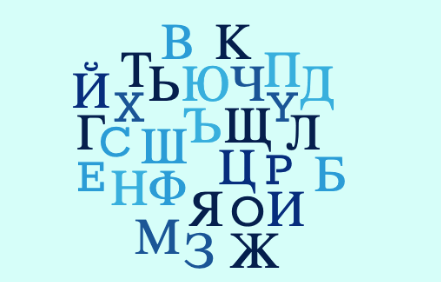
Bulgarian is written using the Cyrillic alphabet. At first, the letters may look unfamiliar, but the system is far more regular and accessible than many learners expect.
The modern Bulgarian alphabet consists of 30 letters. Each letter corresponds to a specific sound, and there are no silent letters. This means that Bulgarian is pronounced exactly as it is written, which makes reading and pronunciation much easier once the alphabet is learned.
The Cyrillic alphabet used in Bulgarian is closely related to Russian Cyrillic, but it is not identical. Most letters look the same and represent the same sounds, which means that learning Bulgarian Cyrillic gives you an immediate head start with Russian and several other Slavic languages.
However, there are also important differences between Bulgarian and Russian Cyrillic. These differences actually make Bulgarian easier to read and learn for beginners.
- Some Russian letters do not exist in Bulgarian. For example, Bulgarian does not use letters such as Ё, Ы, Э, which are specific to Russian.
- Bulgarian pronunciation is more stable. Letters are pronounced in a more consistent way, with fewer changes depending on stress or position in the word.
- There is no strong vowel reduction. In Russian, unstressed vowels often change sound. In Bulgarian, vowels are pronounced clearly, as they are written.
- Bulgarian spelling is more straightforward. What you see is what you say, which makes reading aloud much easier for beginners.
- The printed forms of some letters differ. In Bulgarian typography, letters like д, т, л often have shapes closer to Latin handwriting, which many learners find more intuitive.
Because of these features, Bulgarian Cyrillic is often considered one of the most accessible ways to enter the Cyrillic writing system.
This makes Bulgarian an excellent entry point into the Cyrillic world. Once you can read Bulgarian Cyrillic, you can already recognize and sound out words in many other Slavic languages, even if you do not understand them yet.
With Loecsen, you can start learning Bulgarian without knowing the alphabet in advance, thanks to audio-based lessons and full spoken phrases. At the same time, the alphabet is introduced progressively.
Learning Cyrillic itself is not difficult. For most learners, it takes only a few hours to become familiar with the letters. Doing so is a real advantage: it helps you progress faster, become more autonomous, and access a much wider range of Slavic languages in the future.
To support this, Loecsen provides a sound-based alphabet tool, available further down on this page. Each letter can be heard, seen in real words, and practiced inside short, everyday sentences.
How Bulgarian letters and sounds work in practice
The easiest way to understand the alphabet is through real words. For example:
да – yes
- д (d)
- а (a)
Read together, these sounds form: da
не – no
- н (n)
- е (e)
Read together, these sounds form: ne
This principle applies to all Bulgarian words: you simply pronounce each letter in order.
How to learn the Bulgarian alphabet efficiently
Loecsen provides a dedicated sound-based alphabet tool, available further down on this page, where each letter can be heard, seen, and used inside real words and short sentences.
This approach creates a direct connection between reading, listening, and speaking. By hearing the sound, seeing the letter, and repeating it aloud, learners quickly become comfortable with Cyrillic.
How Bulgarian sentences work in everyday situations
Bulgarian sentence structure is generally subject – verb – object, which is familiar to many learners.
For example:
“Разбирам.” – I understand.
“Искам това.” – I want this.
This stable structure allows learners to form simple sentences very early.
Understanding Bulgarian grammar through real usage
Bulgarian uses grammatical gender for nouns, but agreements are regular and quickly become familiar through repetition.
Verb forms change according to person and tense, but everyday communication relies on a small number of very frequent patterns.
By learning expressions such as “I don’t understand”, “I want this”, or “Where is it?”, learners can already handle basic situations.
In the Loecsen “First Contact” course, grammar is always learned through complete, spoken sentences, never as abstract theory.
What to learn first to start speaking Bulgarian
To start speaking Bulgarian, it is far more effective to focus on complete everyday expressions rather than isolated words.
These expressions are immediately usable and help learners internalize pronunciation, sentence structure, and meaning at the same time.
A concrete and effective to-do list for learning Bulgarian with Loecsen
Learning Bulgarian sustainably relies on simple, regular actions supported by intelligent repetition.
- Practice every day, even just 5 minutes.
- Learn full sentences instead of memorizing word lists.
- Repeat sentences out loud to absorb sounds and rhythm.
- Listen to the same expressions several times.
- Write short sentences by hand to reinforce memory.
- Reuse known phrases in new situations.
- Use Listening mode for passive exposure.
- Practice with AI dialogues to simulate real conversations.
- Rely on the Spaced Repetition System (SRS) and Super Memory to review expressions at the right moment.
Staying motivated while learning Bulgarian
Feeling uncertain at the beginning is normal, especially when learning a new alphabet.
- Lower your daily goal instead of stopping.
- Return to familiar expressions to regain confidence.
- Switch to listening only on low-energy days.
- Accept approximation as part of learning.
Continuity matters more than intensity in language learning.
How the Loecsen “First Contact” course helps beginners
The Loecsen “First Contact” course is a free online Bulgarian course designed for complete beginners.
It focuses on essential everyday expressions, reinforced through listening, repetition, and contextual explanations.
Thanks to its structured progression and Spaced Repetition System (SRS), learners progressively reach a functional CEFR A1 level.
Frequently asked questions about learning Bulgarian
Is Bulgarian difficult for beginners?
Bulgarian may look intimidating because of Cyrillic, but its pronunciation and sentence structure are very learnable.
Can I learn Bulgarian online for free?
Yes, by following a structured free online Bulgarian course such as Loecsen “First Contact”.
How long does it take to start understanding Bulgarian?
With regular practice, learners can understand and use basic Bulgarian expressions within a few weeks.
Course syllabus – What you’ll learn
- Essentials 2-3H • 63-95D • 20-30 sessions
- Conversation 0-0H • 59-89D • 0-0 sessions
- Learning 1-2H • 61-92D • 10-15 sessions
- Colours 1-2H • 61-92D • 10-15 sessions
View all lessons (17)
- Numbers 0-0H • 59-89D • 0-0 sessions
- Time tracking 3-5H • 64-96D • 25-38 sessions
- Taxi 0-0H • 59-89D • 0-0 sessions
- Family 0-0H • 59-89D • 0-0 sessions
- Feelings 0-0H • 59-89D • 0-0 sessions
- Bar 0-0H • 59-89D • 0-0 sessions
- Restaurant 0-0H • 59-89D • 0-0 sessions
- Parting 0-0H • 59-89D • 0-0 sessions
- Transportation 3-5H • 64-96D • 25-38 sessions
- Hotel 0-0H • 59-89D • 0-0 sessions
- Looking for someone 0-0H • 59-89D • 0-0 sessions
- Beach 0-0H • 59-89D • 0-0 sessions
- In case of trouble 0-0H • 59-89D • 0-0 sessions