
- English
- Français
- Deutsch
- Español
- Português
- Italiano
- Čeština
- Dansk
- Ελληνικά
- Svenska
- Eesti keel
- Suomen kieli
- Hrvatski
- Bahasa Indonesia
- Latviešu valoda
- Lietuvių
- Magyar
- Nederlands
- Norsk
- Polski
- Українську
- Русский
- Türkçe
- Română
- العربية
- Srpski
- 汉语
- 日本語
- 한국어
- हिंदी
- עברית
- български език
- বাংলা
- ภาษาไทย
- Kiswahili
- Bahasa Melayu
- Tagalog
- IsiZulu
- Tiếng Việt
- اردو

Learn Polish
10%
?

- Hello
- Good evening
- Goodbye
- See you later
- + A more familiar expression
- Yes
- No
- Excuse me!
- Thanks
- Thanks a lot
- Thank you for your help
- You’re welcome
- Okay
- + A more familiar expression
- How much is it?
- Sorry!
- I don't understand
- I get it
- + When it is a woman who speaks
- I don't know
- Forbidden
- Excuse me, where are the toilets?
- Happy New Year!
- Happy Birthday!
- Happy Holidays!
- Congratulations!

| English | Polish | |||
|---|---|---|---|---|
| Hello | Dzień dobry | |||
| Good evening | Dobry wieczór | |||
| Goodbye | Do widzenia | |||
| See you later | Do zobaczenia | |||
| See you later | Na razie | |||
| Yes | Tak | |||
| No | Nie | |||
| Excuse me! | Przepraszam! | |||
| Thanks | Dziękuję | |||
| Thanks a lot | Dziękuję bardzo! | |||
| Thank you for your help | Dziękuję za pomoc | |||
| You’re welcome | Nie ma za co! | |||
| Okay | Zgoda! | |||
| Okay | Okej | |||
| How much is it? | Przepraszam, ile to kosztuje? | |||
| Sorry! | Przepraszam! | |||
| I don't understand | Nie rozumiem | |||
| I get it | Zrozumiałem | |||
| I get it | Zrozumiałam | |||
| I don't know | Nie wiem | |||
| Forbidden | Wstęp wzbroniony | |||
| Excuse me, where are the toilets? | Przepraszam, gdzie są toalety? | |||
| Happy New Year! | Szczęśliwego Nowego Roku! | |||
| Happy Birthday! | Wszystkiego najlepszego z okazji urodzin! | |||
| Happy Holidays! | Wesołych świąt! | |||
| Congratulations! | Gratulacje! |
View the program
All courses
Objectives Do you want to learn Polish to understand and use the language in common everyday situations in Poland? Loecsen offers a structured Polish course for beginners, designed to reach the skills expected at the CEFR A1 level. Words and sentences are selected to reflect real usage, following a clear and coherent learning progression. Learning is based on complete sentences, grammar explained through usage, focused pronunciation work, and modern tools to support memorization. With 5 to 15 minutes of practice per day, you can reach your first A1 language goal and gain autonomy from your very first exchanges in Polish.
View the presentation
Learn Polish online: a complete guide for real beginners
Polish may look intimidating at first: unfamiliar letters (ą, ę, ł, ń, ó, ś, ź…), long-looking consonant clusters, and a reputation for “hard pronunciation”. But for beginners, Polish is also a surprisingly structured language: spelling is consistent, stress is stable, and the same patterns come back again and again.
On Loecsen, you learn Polish with a simple principle: audio first, real phrases, and smart repetition. You train your ear, build reflexes, and understand how Polish works through usage — not through abstract grammar tables.
The Loecsen principle:
Meaning comes first.
You first understand when and why a sentence is used.
Then you notice how it is built — and you start recognizing the same patterns everywhere.
Meaning comes first.
You first understand when and why a sentence is used.
Then you notice how it is built — and you start recognizing the same patterns everywhere.
Where is Polish spoken, and why learn it?
Polish (język polski) is the official language of Poland and is used daily in administration, school life, work, and media. It is also one of the largest Slavic languages in Europe and is widely present in Polish communities abroad.
Practical point:
Polish is especially useful if you live in Poland, work with Polish partners, or travel outside tourist areas.
Even basic Polish changes everyday situations immediately: shops, transport, services, and paperwork.
Polish is especially useful if you live in Poland, work with Polish partners, or travel outside tourist areas.
Even basic Polish changes everyday situations immediately: shops, transport, services, and paperwork.
The Polish writing system: Latin alphabet + diacritics (very learnable)
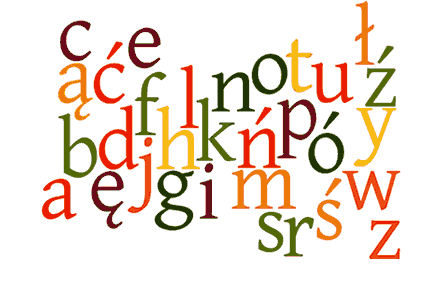
Good news: Polish uses the Latin alphabet. The “new” part is a small set of letters with diacritics (ą, ę, ł, ń, ó, ś, ź) and a few letter-pairs (sz, cz, rz, ch…) that represent single sounds. Polish spelling is generally stable: once you know the main sound rules, you can read with confidence.
- Stress: usually on the second-to-last syllable (a huge beginner advantage).
- Diacritics: not decoration — they change sound and sometimes meaning.
- Digraphs: two letters often represent one sound (cz, sz, rz…).
- Nasal vowels: ą and ę are special and must be learned with audio.
Pronunciation tip:
Polish pronunciation becomes much easier when you approach it as a system of phonemes (distinct sound units).
On Loecsen, each letter and sound is directly linked to audio, real words, and real sentences, so your ear builds accurate pronunciation reflexes naturally.
Polish pronunciation becomes much easier when you approach it as a system of phonemes (distinct sound units).
On Loecsen, each letter and sound is directly linked to audio, real words, and real sentences, so your ear builds accurate pronunciation reflexes naturally.
Polish letters you must learn (with audio)
Below are the Polish letters that are “special” at beginner level (diacritics). Each one is a full letter and should be learned with audio.
-
Ą ą
Nasal vowel (pronunciation depends on the following sound)
-
Ć ć
Soft palatal consonant “ć”
-
Ę ę
Nasal vowel (pronunciation depends on the following sound)
-
Ł ł
Distinct consonant sound (not the same as “l”)
-
Ń ń
Soft palatal “ń” sound
-
Ó ó
Pronounced like “u” in modern Polish (different spelling)
-
Ś ś
Soft palatal “ś” sound
-
Ź ź
Soft palatal “ź” sound
Beginner reflex:
Always learn these letters with audio.
In Polish, spelling is precise, and these sounds carry meaning — your ear is the key.
Always learn these letters with audio.
In Polish, spelling is precise, and these sounds carry meaning — your ear is the key.
Alphabet with audio: how Loecsen connects letters, sound, and meaning
On Loecsen, you can listen to the Polish alphabet directly on the page: each letter is linked to its sound, an example word, and a real Loecsen sentence.
This builds a direct mental link between writing and pronunciation from day one: you do not “memorize the alphabet” — you connect letters to real speech.
Pronunciation: the 6 things that actually matter at the beginning
You do not need a perfect accent to be understood. But Polish becomes much easier when you focus on a few high-impact points.
1) Stress is usually predictable (huge advantage)
In most Polish words, stress is on the second-to-last syllable. That means your rhythm becomes natural quickly.
2) Polish “soft” consonants are real sounds (not decoration)
Letters like ć, ń, ś, ź are distinct sounds. They are not “c / n / s / z with a style” — they are separate phonemes, so train them with audio.
3) ą and ę are nasal vowels — but beginners can learn them through patterns
Polish nasal vowels (ą, ę) change slightly depending on the next sound. You do not need to learn rules first: you need repeated audio exposure in real words.
4) Polish digraphs = one sound
Many Polish sounds are written with two letters (like cz, sz, rz, ch). Treat them as a single unit.
5) “ł” is not “l”
Ł is pronounced roughly like English w (very approximately). This one letter changes clarity a lot.
6) Clusters look scary, but they are readable once you group them
Polish often stacks consonants. The trick is to read them in sound blocks: digraphs first (sz/cz/rz/ch), then the rest. Loecsen helps because you always learn clusters inside real phrases with audio.
Very practical:
If you keep predictable stress + learn the special letters with audio, your Polish becomes understandable fast.
If you keep predictable stress + learn the special letters with audio, your Polish becomes understandable fast.
Polish grammar for real beginners: 5 points that simplify everything (A1 → A2)
Loecsen is designed to be practical (real-life phrases, audio, fast reflexes) and also a serious beginner course. You don’t start with abstract rules: you start with sentences you actually use, then you notice the patterns that repeat.
How to use this chapter:
Listen to the phrases, repeat them out loud, then look at the highlighted words and endings.
Polish becomes much easier when you notice patterns instead of trying to “study grammar”.
Listen to the phrases, repeat them out loud, then look at the highlighted words and endings.
Polish becomes much easier when you notice patterns instead of trying to “study grammar”.
Point 1 — “I / you / we” are clear, and verbs follow recognizable patterns
Polish pronouns are simple, and beginner verbs repeat the same shapes again and again.
Nie rozumiem.
I don’t understand.
I don’t understand.
Nie wiem.
I don’t know.
I don’t know.
What to notice:
Polish often lets you speak without pronouns because the verb form carries information.
At A1, you can still add pronouns if you want clarity — but you will quickly recognize core verb shapes.
Polish often lets you speak without pronouns because the verb form carries information.
At A1, you can still add pronouns if you want clarity — but you will quickly recognize core verb shapes.
Point 2 — Asking “do you…?” is extremely reusable: Czy
Polish has a beginner-friendly yes/no question marker: czy. Put it at the start, and you instantly have a polite question.
Czy mówisz po polsku?
Do you speak Polish?
Do you speak Polish?
Czy jest w pobliżu jakieś muzeum?
Is there a museum nearby?
Is there a museum nearby?
Beginner shortcut:
Learn this frame by heart: Czy … ?
You can reuse it everywhere with minimal changes.
Learn this frame by heart: Czy … ?
You can reuse it everywhere with minimal changes.
Point 3 — The 4 question words that unlock daily life
You do not need dozens of question forms. A small set covers most A1–A2 situations:
- Gdzie = where
- Kiedy = when
- Ile = how much / how long
- O której = at what time
Gdzie mogę skorzystać z internetu?
Where can I use the internet?
Where can I use the internet?
Kiedy tu przyjechałeś?
When did you arrive? (to a man)
When did you arrive? (to a man)
Ile czasu zostajesz?
How long are you staying?
How long are you staying?
O której godzinie wyjeżdżasz?
What time are you leaving?
What time are you leaving?
What to notice:
Polish keeps the sentence structure stable. You mainly swap the question word.
Polish keeps the sentence structure stable. You mainly swap the question word.
Point 4 — Polish often marks “male vs female” in the past
At beginner level, Polish gives you a very practical clarity marker: many past forms change depending on whether the speaker is male or female. You see it directly in common phrases:
Zrozumiałem.
I understood. (said by a man)
I understood. (said by a man)
Zrozumiałam.
I understood. (said by a woman)
I understood. (said by a woman)
Jestem spóźniony.
I’m late. (said by a man)
I’m late. (said by a man)
Jestem spóźniona.
I’m late. (said by a woman)
I’m late. (said by a woman)
Beginner tip:
Don’t overthink it: just learn both versions when they appear in Loecsen.
Your brain quickly learns: -em / -y often feels “male”, -am / -a often feels “female”.
Don’t overthink it: just learn both versions when they appear in Loecsen.
Your brain quickly learns: -em / -y often feels “male”, -am / -a often feels “female”.
Point 5 — “I have / I’m cold / I’m hot” is built as “to me”
Polish often expresses states with a structure that literally means “to me”. This is extremely common in daily life:
Zimno mi.
I’m cold. (literally: cold to me)
I’m cold. (literally: cold to me)
Gorąco mi.
I’m hot.
I’m hot.
Why this matters:
This one small word mi is a key building block in Polish.
Loecsen makes it automatic by repeating it in real contexts.
This one small word mi is a key building block in Polish.
Loecsen makes it automatic by repeating it in real contexts.
Our favorite advice:
Don’t “study Polish grammar”. Listen to real phrases, repeat them, then notice the repeating blocks: czy, question words, and small core words like mi.
Polish becomes easy when these blocks become reflexes.
Don’t “study Polish grammar”. Listen to real phrases, repeat them, then notice the repeating blocks: czy, question words, and small core words like mi.
Polish becomes easy when these blocks become reflexes.
A simple and effective learning routine with Loecsen
Polish works best with short, regular sessions and repeated exposure to the same sentence structures. Here is a routine that matches the way the brain builds language reflexes:
- Practice a little every day (5–10 minutes). Frequency beats intensity.
- Listen carefully to the same phrases several times (your ear learns Polish sound blocks).
- Repeat out loud (even quietly). Polish clarity improves fast through speaking.
- Notice recurring blocks: czy, question words, and diacritics in real words.
- Use “Listen mode” on low-energy days: Polish improves a lot through passive exposure.
- Trust SRS + Super Memory to review at the right time — crucial for pronunciation and reflexes.
Key rule:
Short, frequent listening beats long, irregular study sessions — especially for Polish.
Short, frequent listening beats long, irregular study sessions — especially for Polish.
Staying motivated while learning Polish
With Polish, progress is often internal before it becomes visible. First you recognize sounds and recurring blocks, then you understand faster, then speaking becomes easier.
- Trust repetition, even when progress feels slow.
- Accept partial understanding as normal: it means your brain is building patterns.
- Return to familiar phrases to regain confidence.
- On low-energy days, focus on listening — it still moves you forward.
How the Loecsen “First Contact” course supports real beginners
Loecsen provides a structured path to learn Polish through real usage. Grammar is introduced through examples, audio, and repetition — without forcing abstract theory. With regular practice, learners reach a functional CEFR A1 level — enough to understand and use Polish in simple everyday situations.
Questions you may have when learning Polish
1) Is Polish hard to learn?
Polish looks complex, but it becomes manageable quickly with the right method. The main challenge is pronunciation (soft consonants, clusters, ą/ę) — and Loecsen reduces this by teaching everything through audio and repeated real phrases.
2) Do I need to learn Polish special letters?
Yes. Letters like ą, ę, ł, ń, ó, ś, ź are meaningful and change pronunciation. Learn them with audio from the beginning.
3) Where is the stress in Polish words?
In most Polish words, stress is on the second-to-last syllable. This makes pronunciation rhythm more predictable than many learners expect.
4) What are the most useful Polish question words?
Start with gdzie (where), kiedy (when), ile (how much/how long), and o której (at what time). They cover a huge part of daily life.
5) Why are there different forms like “zrozumiałem / zrozumiałam” (I get it)?
Polish often marks gender in the past. Loecsen teaches this through real phrases: you learn both versions naturally.
6) Can I get by in Poland with English?
In big cities and tourist settings, often yes. But for daily life (services, transport, local interactions), even basic Polish changes everything and improves how people respond to you.
7) What should I focus on first to progress fast?
Audio + repetition + survival phrases. Learn the special letters with sound, then build a core set of everyday sentences (help, directions, buying, basic conversation). That’s exactly what Loecsen is designed for.
Why Loecsen works especially well for Polish
Polish is a language where patterns repeat constantly (question markers, core blocks, stress rhythm, recurring phrases). Loecsen takes advantage of this by:
- reusing the same structures across themes,
- anchoring everything in audio,
- and using spaced repetition (SRS + Super Memory) to make forms automatic.
You don’t “study Polish”. You build Polish reflexes.
Our favorite advice:
Start with the special letters with audio (ą ę ł ń ó ś ź).
Then master czy + the main question words (gdzie, kiedy, ile, o której).
Once these become automatic, Polish feels dramatically easier.
Start with the special letters with audio (ą ę ł ń ó ś ź).
Then master czy + the main question words (gdzie, kiedy, ile, o której).
Once these become automatic, Polish feels dramatically easier.
Course syllabus – What you’ll learn
- Essentials 2-3H • 63-95D • 20-30 sessions
- Conversation 0-0H • 59-89D • 0-0 sessions
- Learning 1-2H • 61-92D • 10-15 sessions
- Colours 1-2H • 61-92D • 10-15 sessions
View all lessons (17)
- Numbers 0-0H • 59-89D • 0-0 sessions
- Time tracking 3-5H • 64-96D • 25-38 sessions
- Taxi 0-0H • 59-89D • 0-0 sessions
- Family 0-0H • 59-89D • 0-0 sessions
- Feelings 0-0H • 59-89D • 0-0 sessions
- Bar 0-0H • 59-89D • 0-0 sessions
- Restaurant 0-0H • 59-89D • 0-0 sessions
- Parting 0-0H • 59-89D • 0-0 sessions
- Transportation 3-5H • 64-96D • 25-38 sessions
- Hotel 0-0H • 59-89D • 0-0 sessions
- Looking for someone 0-0H • 59-89D • 0-0 sessions
- Beach 0-0H • 59-89D • 0-0 sessions
- In case of trouble 0-0H • 59-89D • 0-0 sessions