Learn Russian online: a free course for complete beginners
Russian is one of the most widely spoken languages in Europe and Eurasia, used daily by millions of people across many countries. For beginners, Russian can seem intimidating at first because of the Cyrillic alphabet and its reputation for complex grammar. In reality, when approached through real everyday expressions and spoken usage, Russian becomes much more structured and predictable than expected.
The Loecsen Russian course is a free online Russian course for beginners, designed for people starting from zero. It helps learners begin understanding and using modern Russian from the very first lessons, with a strong focus on practical communication.
The origins of Russian: history, identity, and influence
Russian belongs to the East Slavic branch of the Indo-European language family, alongside Ukrainian and Belarusian. Its roots go back to Old East Slavic, the language spoken in medieval Kyivan Rus’, which later evolved into distinct modern languages.
Over centuries, Russian developed under the influence of Church Slavonic, which shaped its written tradition, especially in religious, literary, and formal language. This explains why Russian has a rich vocabulary with stylistic layers, while still remaining highly systematic in everyday speech.
Today, Russian plays a major cultural and scientific role. It has contributed thousands of words to international vocabulary in areas such as literature, science, politics, and space exploration. Learning Russian therefore provides access not only to a modern spoken language, but also to a vast cultural and historical heritage.
The Russian alphabet: the real key to learning Russian
The Cyrillic alphabet is often seen as the main obstacle for beginners. In practice, it is one of the most phonetic and consistent writing systems used in Europe.
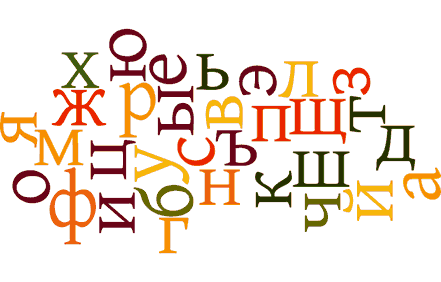
Modern Russian uses a Cyrillic alphabet composed of 33 letters. Each letter corresponds to a sound, and pronunciation is largely predictable once the alphabet is known. This means that learners can start reading Russian words aloud very early, even before understanding their meaning.
If you already know the Latin alphabet, the principle is familiar: letters represent sounds, and words are built by combining them. Some Cyrillic letters look different but sound familiar, while others look familiar but sound different. Once this initial adjustment is made, reading becomes natural.
The Russian alphabet: understanding Cyrillic step by step
The Russian alphabet is based on Cyrillic and consists of 33 letters. Once learned, it allows you to read Russian words reliably, even if you do not understand them yet.
Each letter corresponds to a sound, and Russian spelling is largely consistent. This makes Cyrillic much more accessible than it may seem at first.
| 1 | А / а | a |
| 2 | Б / б | b |
| 3 | В / в | v |
| 4 | Г / г | g |
| 5 | Д / д | d |
| 6 | Е / е | ye / e |
| 7 | Ё / ё | yo |
| 8 | Ж / ж | zh |
| 9 | З / з | z |
| 10 | И / и | i |
| 11 | Й / й | y |
| 12 | К / к | k |
| 13 | Л / л | l |
| 14 | М / м | m |
| 15 | Н / н | n |
| 16 | О / о | o |
| 17 | П / п | p |
| 18 | Р / р | r |
| 19 | С / с | s |
| 20 | Т / т | t |
| 21 | У / у | u |
| 22 | Ф / ф | f |
| 23 | Х / х | kh |
| 24 | Ц / ц | ts |
| 25 | Ч / ч | ch |
| 26 | Ш / ш | sh |
| 27 | Щ / щ | shch |
| 28 | Ъ / ъ | hard sign |
| 29 | Ы / ы | y |
| 30 | Ь / ь | soft sign |
| 31 | Э / э | e |
| 32 | Ю / ю | yu |
| 33 | Я / я | ya |
How to learn the Russian alphabet efficiently
Loecsen provides an interactive sound-based Cyrillic alphabet further down on this page. Each letter can be heard, seen, and practiced inside real words and short everyday sentences.
This approach allows beginners to connect reading, listening, and speaking naturally. With regular exposure, most learners can read Russian within a few days, which removes one of the main psychological barriers to learning the language.
Understanding Russian grammar through real everyday sentences
Russian grammar often feels intimidating to beginners because. In reality, Russian follows a clear internal logic. Once this logic is understood through real usage, the language becomes much more predictable.
The key idea is simple: Russian does not rely mainly on word order to express meaning. Instead, meaning is carried by word endings. These endings indicate who does what, to whom, and in what role.
The central role of the verb in Russian
In everyday Russian, sentences are often short, direct, and verb-centered. The verb already contains information about the subject, which allows speakers to express ideas efficiently.
Я понимаю. (ya ponimáyu) – I understand.
The verb понимаю already shows that the speaker is “I”. The pronoun я is often used at beginner level for clarity, but it can later be omitted in context.
Я не понимаю. (ya ne ponimáyu) – I don’t understand.
Negation in Russian is extremely regular: you simply place не before the verb. The sentence structure does not change.
Я хочу это. (ya khochú éto) – I want this.
Here, the verb хочу expresses intention, while это completes the meaning. This structure is very frequent in everyday situations.
By learning and repeating such complete, high-frequency sentences, beginners naturally absorb verb patterns, negation, and sentence rhythm without studying abstract rules.
Why Russian word order feels flexible
Because grammatical roles are expressed by endings, Russian word order is relatively flexible. At beginner level, learners can safely follow simple patterns like subject + verb + object and be fully understood.
For example:
Я вижу дом. (ya vízhu dom) – I see the house.
Even if elements move slightly in real speech, the meaning remains clear because endings carry the function.
Grammatical gender: how Russian nouns work
Russian nouns belong to one of three grammatical genders:
- Masculine – often ending in a consonant (дом – house)
- Feminine – often ending in -а or -я (книга – book)
- Neuter – often ending in -о or -е (место – place)
At beginner level, you do not need to memorize gender rules. By learning nouns inside real sentences, gender becomes intuitive over time.
Cases: how Russian replaces prepositions
One of the main differences between Russian and Western European languages is the use of cases. Instead of adding many prepositions, Russian changes the ending of nouns.
For example, with the word дом (house):
- дом – the house (basic form)
- в доме – in the house (location)
- из дома – from the house (origin)
The word itself stays recognizable. The ending tells you how the word functions in the sentence.
At A1 level, learners do not study cases as theory. Instead, they encounter them naturally inside frequent expressions such as:
Я дома. (ya dóma) – I am at home.
Я иду домой. (ya idú damóy) – I am going home.
Through repetition, the brain starts recognizing patterns without conscious analysis.
Why Russian grammar becomes easier with usage
Russian grammar may look complex on paper, but it is highly systematic. Endings repeat, verb patterns return, and structures stay stable.
This is why the Loecsen approach does not separate grammar from usage. Grammar is learned through spoken sentences, repeated in real contexts, until understanding becomes automatic.
At beginner level, the goal is not to name cases or conjugation types, but to recognize meaning, understand speech, and start responding naturally.
With this approach, Russian stops being a collection of rules and becomes a language you can actually use.
A complete learning method to reach A1 in Russian step by step
Reaching a first functional level in Russian does not require mastering all grammatical cases or verb tables. What matters is a clear progression, regular practice, and repeated exposure.
The Loecsen Russian course guides beginners toward a practical CEFR A1 level, focused on understanding and being understood in everyday situations.
The method combines several complementary tools:
- Short daily practice sessions to build consistency.
- Listening-first exposure to develop comprehension of natural Russian speech.
- Active repetition to anchor pronunciation and rhythm.
- Progressive tests to strengthen recall.
- Speech recognition to practice pronunciation.
- Smart review with a Spaced Repetition System (SRS).
- AI dialogue tools to practice real-life situations without pressure.
- Learning with music to connect Russian with motivating content.
This integrated approach allows learners to progress steadily, recognize patterns, and start communicating early.
Helpful anti-dropout tips when motivation decreases
Motivation drops are normal. The key is to keep the habit alive.
- Reduce your goal to 2 minutes.
- Switch to listening instead of speaking.
- Return to familiar expressions.
- Use enjoyable content through the Learn with music tool.
- Speak without aiming for perfection.
- Change the time of day you practice.
- Use AI dialogue as a light, playful activity.
Consistency matters more than intensity.
Frequently asked questions about learning Russian
Is Russian very difficult for beginners?
Russian feels unfamiliar at first, but its internal logic is consistent. With spoken practice, progress is faster than expected.
Can I learn Russian online for free?
Yes. Loecsen offers a free online Russian course designed for complete beginners.
How long does it take to read Cyrillic?
Most learners can read Cyrillic letters within a few days using a sound-based approach.
Do I need to learn grammar cases to start speaking?
No. At beginner level, cases are learned naturally through common expressions and repeated exposure.